
The Paint Creek strike began as a wage dispute in 1912 and grew into a fight over union rights across two West Virginia valleys. When miners along nearby Cabin Creek joined, the conflict spread. Evictions, armed clashes, military rule, and a bitter settlement made the struggle of 1912–1913 a turning point in the state’s coalfield history.
One injured woman’s words reveal what staying in that struggle required. In an April 1913 report, Mrs. Fremont Older described Mrs. Hall resting with bandaged feet after the attack on Holly Grove. Hall still supported the strike. “We’ve toughed it so long I guess we can tough it a little longer,” she told the reporter. Behind the demands were families deciding how much longer they could hold on.
Why Paint Creek Miners Walked Out
The walkout began on April 18, 1912. Paint Creek miners already belonged to the United Mine Workers of America. They wanted wages equal to those paid at other mines in the area. Operators refused the increase.
As the conflict widened, union recognition became central. Miners wanted their organization accepted as their bargaining representative. Operators sought to break union power; some portrayed the union as serving competing coal producers outside West Virginia.
That disagreement made a wage settlement harder. The parties were also fighting over who could speak for the workers.
How the Strike Reached Cabin Creek
Cabin Creek miners had lost their earlier union foothold. Their demands included organizing rights, an end to blacklisting, freedom to meet and speak, alternatives to company stores, and removal of mine guards.
They also wanted honest coal weights and union-selected checkweighmen to watch the scales. When a miner’s pay depended on the amount of coal credited to him, weighing practices mattered as much as the posted pay rate.
Mother Jones came to the region in June 1912 and helped rally support. Her speeches brought attention to the dispute, but the strike depended on miners and households across the two valleys staying involved.
The spread to Cabin Creek changed the problem facing both sides. A dispute over one group of miners’ wages had become a wider challenge to the way coal companies exercised power.
Eviction Put Families Into the Strike
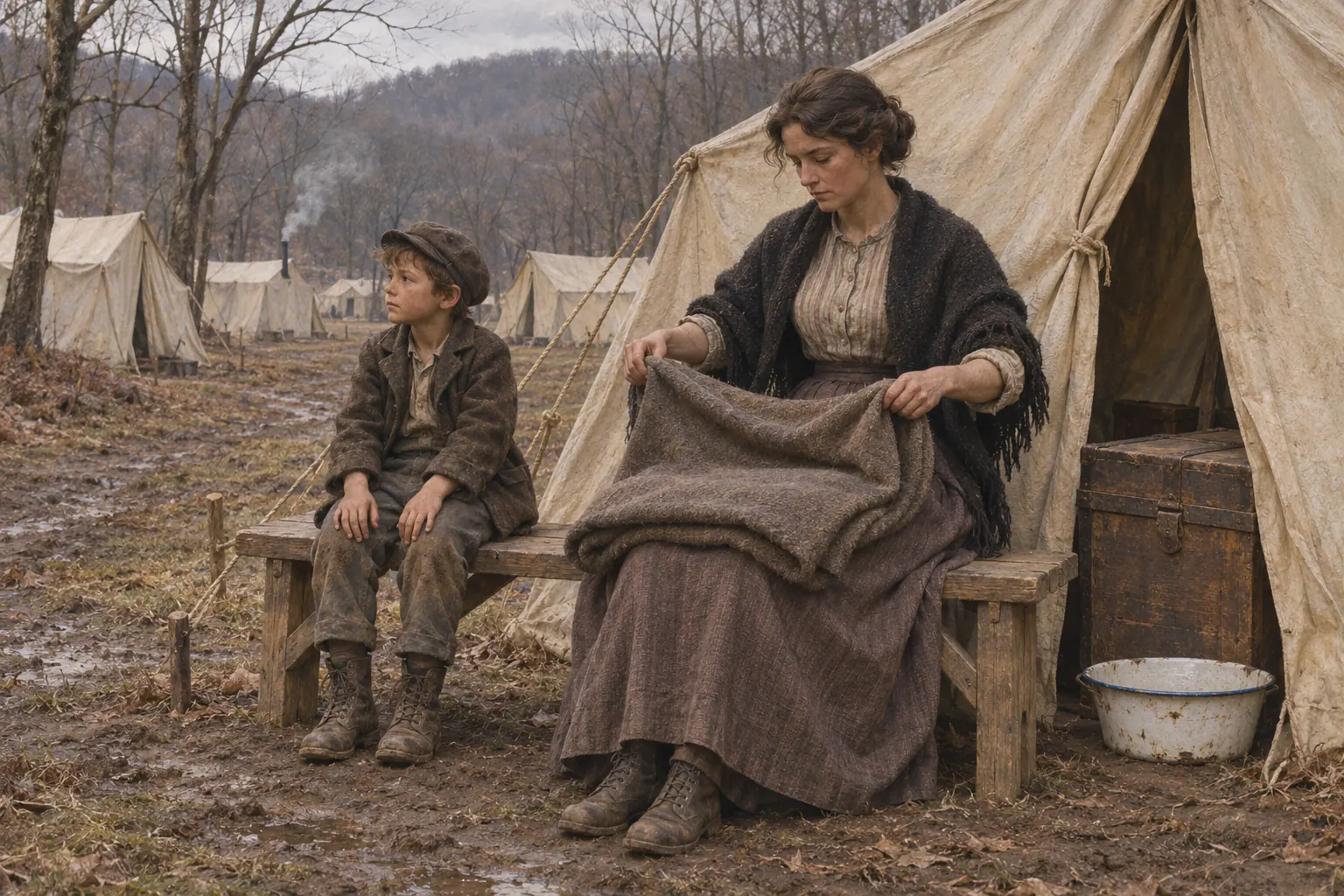
Company housing tied a family’s shelter to the miner’s job. When striking workers were evicted, the consequences reached everyone living under that roof. Union-supported tent colonies offered somewhere to go without leaving the coalfield.
PBS’s American Experience explains why that location mattered. Keeping displaced families near the mines helped sustain the strike. Moving away could remove a worker from the struggle; staying nearby kept the household connected to it.
Women still had to feed children, wash clothes, and manage daily needs. Those jobs did not stop because the family now lived under canvas. Some women also confronted replacement workers. Their labor and choices helped determine whether a strike could continue.
A tent colony was therefore both emergency housing and part of the organizing effort. A decision made at the mine office could change where a child slept that night. A decision made inside a tent could help keep the walkout going another day.
Martial Law Changed the Rules
Governor William E. Glasscock first declared martial law in the strike district on September 2, 1912. State troops entered and confiscated weapons. There would be three periods of military rule: the first beginning in September, another in November, and a third in February 1913.
Military authorities also tried civilians. The National Park Service’s history of Mother Jones’s prison explains the controversy: civilian courts were still operating, yet people caught in the labor conflict faced military proceedings. Jones herself was arrested in February and confined at Pratt.
The argument now reached beyond wages or union membership. Who had authority to arrest a civilian, conduct a trial, and impose punishment? Military control made that question part of everyday life in the strike zone.
Older’s newspaper reporting shows how that control could affect visitors, too. In her March 24 account, she described being questioned by military officials while trying to reach Jones. Older openly favored the miners, and her reporting should be read with that viewpoint in mind. It still records the barriers a reporter encountered while trying to tell their story.
The Night of the Bull Moose Special
On February 7, 1913, men aboard an armored train known as the Bull Moose Special fired into Holly Grove. Historian James Green’s account, republished by the West Virginia Mine Wars Museum, places the attack after earlier fighting between union pickets and mine guards near Mucklow.
Coal operator Quin Morton and Sheriff Bonner Hill boarded the train with armed deputies and detectives. Steel plating protected the cars, and the train carried a machine gun. Green draws on the testimony of Lee Calvin, who was aboard. Calvin described men firing from the train, then shots coming back from outside.
The train attack has become one of the conflict’s best-known events. Testimony from a single household shows why it could not be separated from family life.
Maud Estep later told a Senate investigating subcommittee that she had been at home with her husband, Cesco, their young child, and relatives. They lived in a house at Holly Grove. She heard shooting late that night.
Her husband urged the women to get into the cellar. Maud, who was pregnant, took their child toward the kitchen door. Cesco was killed outside while calling for them to get to shelter. A cousin was wounded.
Her account has limits that matter. She said she did not see the train. Her testimony describes what she heard and what happened around her home; it does not settle every disputed detail of the wider attack.
A Settlement With Limits
Henry D. Hatfield became governor on March 4, 1913, and pressed for a settlement. The terms he announced on April 14 included a nine-hour workday, the right to shop outside company stores, union-selected checkweighmen, and protection against discrimination for union membership.
Acceptance came under pressure. Hatfield threatened miners who rejected the terms with removal from the state. Paint Creek miners signed the Hatfield Contract on May 1. Cabin Creek miners continued resisting until July.
Those separate dates matter. The conflict did not end everywhere with one announcement or one shared decision. People who had joined the same struggle could disagree about whether the available terms were enough.
The West Virginia State Archives records that Baldwin-Felts guards were removed from both valleys by the July settlement. It also identifies union recognition as a problem left unresolved by Hatfield’s earlier terms.
The settlement changed working conditions, but it left union demands unmet. Returning to work did not mean the struggle over company power was over.
What the Conflict Changed
The violence and military proceedings drew federal attention. A Senate committee report dated May 26, 1913, recommended an investigation into the Paint Creek district. Its proposed questions covered forced labor through debt, interference with mail, and claims that citizens had been arrested and tried in violation of federal law.
That report proposed an inquiry; it was not a final finding that every allegation was true. Hearings such as the one where Maud Estep testified brought local experiences into a national record.
Within the union, dissatisfaction with the settlement helped strengthen new leaders. In 1916, Frank Keeney became president of UMWA District 17, with Fred Mooney as secretary-treasurer. The strike’s consequences outlasted the return to work.
So did its losses. When Maud testified in June 1913, she said she had not returned to the house she left after her husband’s death. For a family like hers, the end of a strike could not restore the life that came before it.
Strong Backs. Red Necks. Deep Roots.

Explore more stories about mountain work, family, and survival in Coal Mining Lives & Labor.
Sources and Further Reading
- Fred A. Barkey, The West Virginia Encyclopedia: Paint Creek–Cabin Creek Strike
- Mrs. Fremont Older’s reports, March 24 and April 1, 1913; West Virginia Archives and History transcription
- West Virginia State Archives: West Virginia’s Mine Wars
- Michael Ridderbusch, WVU Libraries: Major Coal Strike One Hundred Years Ago
- PBS American Experience: Women in the Mine Towns
- National Park Service: Mother Jones Prison
- James Green: Night of the Bull Moose Special, In These Hills, volume 1, issue 1 (PDF)
- Maud Estep’s Senate testimony, June 13, 1913; West Virginia Archives and History transcription
- U.S. Senate Report 63-52: Proposed Paint Creek investigation, May 26, 1913 (PDF)